Well it seems that somehow my post about articles about my CAJ disappeared. I honestly don't know it it was deleted or if it didn't upload correctly.
To sum up, here is what I found.
http://archneur.jamanetwork.com/article.aspx?articleid=784743
An article from Kevin Warwick, a well known transhumanist and co-founder of this whole hype.
Honestly, I couldn't have wished for something better than this, as there is everything in there which has to be in an abstract.
He includes the Objective, the setting/range, the findings and a conclusion. He explains the methods as well, just in a larger scale, as it contains to much information to be compressed.
--------
Another paper related to my topic was this one, which i only could read the abstract as the entire book would cost around €35 .
http://link.springer.com/article/10.1023/B:ETIN.0000006870.65865.cf
"The era of the Cyborg is now upon us. This has enormous implications on
ethical values for both humans and cyborgs. In this paper the state of
play is discussed. Routes to cyborgisation are introduced and different
types of Cyborg are considered. The author's own self-experimentation
projects are described as central to the theme taken. The presentation
involves ethical aspects of cyborgisation both as it stands now and
those which need to be investigated in the near future as the effects of
increased technological power have a more dramatic influence. An
important feature is the potential for cyborgs to act against, rather
than for, the interests of humanity."
This one lacks a little bit in conclusion and/or recommendations, but explains well why this topic is important, the objective and the methods used.
Ciao,
Fabio
Posts mit dem Label SUK3 werden angezeigt. Alle Posts anzeigen
Posts mit dem Label SUK3 werden angezeigt. Alle Posts anzeigen
Mittwoch, 25. Juni 2014

Sonntag, 22. Juni 2014
Shocking Implant Video
As I already have written about the insertion of magnets into one's finger to enhance one's senses, I recently stumbled over a video while browsing the web for information for my CAJ.
https://www.youtube.com/watch?v=BRKqUqrkeR8
Generally people who did this post in forums that it is not a smart idea to do this operation alone at home, simply because of the reason that so much could go wrong. You could cut to deep, mess up the cut, get the wrong magnet coating and you will probably die from a heavy metal intoxication, you could mess up the stitches, you could get infected by bacteria getting into the wound. The dangers are endless. and while watching this video I realized why I could never work as a surgeon.
I had to pause watching this video as I could not see how this guy hollowed out the tip of his finger using nothing but nail scissors. And while I paused this video I am writing this post. To be honest, I am currently still baffled that people would actually do that.
Of course, this is only a small operation and apparently you could do it at home, but for bigger surgeries you should definitely go to a piercer who knows how to properly anesthetize the body part in which you would like to get the implant.
https://www.youtube.com/watch?v=BRKqUqrkeR8
Generally people who did this post in forums that it is not a smart idea to do this operation alone at home, simply because of the reason that so much could go wrong. You could cut to deep, mess up the cut, get the wrong magnet coating and you will probably die from a heavy metal intoxication, you could mess up the stitches, you could get infected by bacteria getting into the wound. The dangers are endless. and while watching this video I realized why I could never work as a surgeon.
I had to pause watching this video as I could not see how this guy hollowed out the tip of his finger using nothing but nail scissors. And while I paused this video I am writing this post. To be honest, I am currently still baffled that people would actually do that.
Of course, this is only a small operation and apparently you could do it at home, but for bigger surgeries you should definitely go to a piercer who knows how to properly anesthetize the body part in which you would like to get the implant.
Sonntag, 25. Mai 2014
Abstract
WHEN ZOMBIES ATTACK!:!
MATHEMATICAL MODELLING OF AN OUTBREAK OF
ZOMBIE INFECTION! !
MATHEMATICAL MODELLING OF AN OUTBREAK OF
ZOMBIE INFECTION! !
 The aim of this
abstract is to demonstrate the flexibility of mathematical modelling by showing
it on the case of a pandemic zombie outbreak. The author admits that the
scenarios are in fact fairly unrealistic, as no such modelling ever has been
made, but wants to show nevertheless the most effective model. He demonstrates
this by using the commonly known slow, stupid zombie as reference point while
comparing five common models of zombie outbreaks, namely the Basic Model, Model with
Latent Infection, Model with
Quarantine, Model with
Treatment and Impulsive Eradication.
The results brought comparable results as all models showed that human-zombie
co-existence cannot prevail as infection rates and death by zombification overwhelm
humankind sooner or later, depending on the model. While model 1 and 2 state
that the eradication of humanity is just a matter of several days, and model 3
and 4 state that due to the exponential increase of infected people humankind
will be eradicated, simply with a bit of delay. The only model that proved
successful for this kind of pandemic is the last model mentioned, the Impulsive
Eradication, stating that as soon as the infection spreads, every person
affected has to be neutralized. Using given equation the conflict of a zombie
outbreak would be dealt with in only ten days, avoiding the extinction of humankind.
Even though the scenario of a sudden zombie outbreak is purely fictional, the
risk of a global disease is not. The only way to stop a pandemic is to act
quickly and decisively.
The aim of this
abstract is to demonstrate the flexibility of mathematical modelling by showing
it on the case of a pandemic zombie outbreak. The author admits that the
scenarios are in fact fairly unrealistic, as no such modelling ever has been
made, but wants to show nevertheless the most effective model. He demonstrates
this by using the commonly known slow, stupid zombie as reference point while
comparing five common models of zombie outbreaks, namely the Basic Model, Model with
Latent Infection, Model with
Quarantine, Model with
Treatment and Impulsive Eradication.
The results brought comparable results as all models showed that human-zombie
co-existence cannot prevail as infection rates and death by zombification overwhelm
humankind sooner or later, depending on the model. While model 1 and 2 state
that the eradication of humanity is just a matter of several days, and model 3
and 4 state that due to the exponential increase of infected people humankind
will be eradicated, simply with a bit of delay. The only model that proved
successful for this kind of pandemic is the last model mentioned, the Impulsive
Eradication, stating that as soon as the infection spreads, every person
affected has to be neutralized. Using given equation the conflict of a zombie
outbreak would be dealt with in only ten days, avoiding the extinction of humankind.
Even though the scenario of a sudden zombie outbreak is purely fictional, the
risk of a global disease is not. The only way to stop a pandemic is to act
quickly and decisively. 
CAJ Abstract
Bio-Hacking
Body hacking and enhancing human bodies is becoming an increasingly
important topic. This CAJ is to show why and to what extend a human body can be
modified at in the early twentieth century. As this still is an underdeveloped
field of research, there are mostly non-academical papers and online videos,
which explain how the process of enhancing the body is carried out. Fact is,
that up until now and aside from prosthesis, not many forms of body-enhancing
objects exist, which is bound to change in the near future. The combination of
human tissue and machines, or currently circuit boards will allow the human body
to develop much faster than by natural evolution.
Donnerstag, 15. Mai 2014
How to kill Hitler in 6 simple steps:
Step 1: First, you have to acquire a weapon of your choice. The simplicity of this task depends on your location and gun possession laws.
- Choose a weapon, which you are comfortable with, range or close combat, as both should do the job.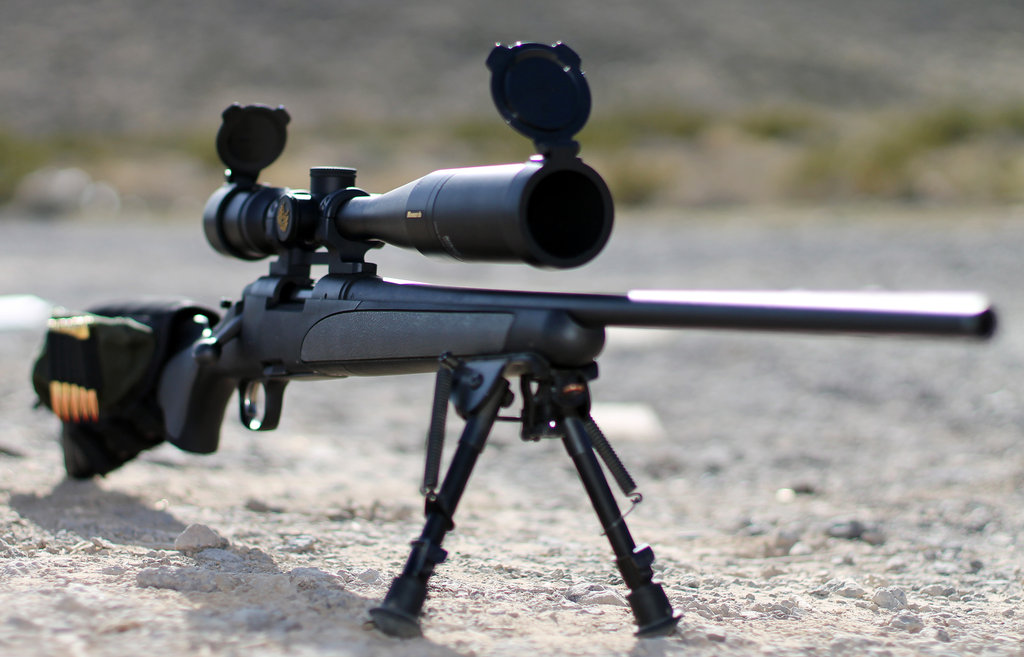
- Our recommendation is to chose a high-power long range rifle such as the Remington 700 or the Barrett .50 cal to guarantee an optimal outcome.
Step 2: Proceed to find a time machine. Depending on your preferences you can choose either a classical DeLorean with a flux capacitor modification or a “Tardis”, which is usually in the form of a blue police call box.
Step 3: Choose the point in time and space where you would like to kill Adolf Hitler.
- Here it is of utmost importance that you do your research about Hitler’s location very carefully, as you do not want to be caught teleporting in and finding no one except soldiers of the Wehrmacht.
Step 4: Conceal you loaded weapon and travel back in time. 
Step 5: Find and kill Hitler.
The difficulty of this task depends on your research and your weapon choice.
Final Step: Return to your time and see what has changed, while claiming your reward for saving millions of people’s lives.
Congratulations! You just killed your first dictator and changed history! Please keep in mind that your actions may interrupt the time-space continuum and that, depending on your timing, you may have just killed the most beloved dictator in the world.
Disclaimer: The author of this instructional guide is not liable for any ruptures in the time-space continuum.
Sonntag, 19. Januar 2014
Petschatschka or as other people call it: Pecha Kucha.
One autumn evening Martin and I and the rest of the English SUK3 class sat together and listened to Frank's lecture. But that evening he expected us to chose a topic to work on, on our own!

I do not know what happened to me, I blame it on my sleep schedule and my exhausting work.
I think overall we did a thorough job, i had some minor screw-ups, but I think we kind of did well.
Nevertheless next time I am sure to pick a topic which is not entirely foreign to me to keep that from happening.
And maybe I'll start a little earlier to work on it.
We'll see.
That's it folks, hope you enjoyed and:
Ciao
Fabio
Freitag, 17. Januar 2014
Why was joining the EU the best move France could make at the time?
Fabio Nitsche, Martin Tieber, Chloé Cloison
First draft:
Why
was joining the EU the best move France could make at the time?
Introduction
With
the current Eurozone crisis, many member countries reflect on their
reasons for joining the EU. Especially the nations gravely affected
by the crisis are in doubt if staying in the Union would prove to be
a wise decision. This thinking gave rise to many anti-European
parties throughout the continent. Although economically and
politically strong countries like France were also hit hard by the
crisis, they are willing to spend billions in order to keep the Union
together. To understand this move it is important to know the
reasoning behind the creation of the European Union and the
intentions of its “founding fathers”.
1.
Reasons why France was one of the founders of the EU
The
European Union was founded by France, Germany, Italy and the Benelux
states in 1957 with the signing of the Treaty of Rome. It was the
successor of the European Coal and Steal Community (ECSC) and the
European Economic Community (EEC). These organisations were created
to prevent war between France and Germany and to strengthen the
economic recuperation as well as the political relations in Europe.
Being a founding member of all these organisations, France was
rewarded with huge influence within the European Union and solid
economic growth. With the end of the Second World War Europe had
endured a century marked by conflicts, mainly between Germany and
France, so French politicians sought a solution to prevent these two
nations from ever confronting each other again. By including the
Benelux states, France acquired the means to put pressure on Germany,
should the need arise, due to a longer common border. Additionally
the threat of the USSR expanding further to the west, as well as the
possibility of another dictator rising should be diminished.
2.
Benefits from 1951 to 2013
Although
this seemed to be reason enough, France also benefitted from the
Union. Faster restoration from the devastation brought about by WWII,
less complicated trade between the member states. Throughout the
second half of the 20th century their membership in the continuously
growing European Union opened new markets for the French economy.
This led to an immense rise in exports, resulting in the expansion of
many nationally restricted French companies, such as Peugeot, Citroen
and L’Oréal. Due to the economic upwind the political relations
prospered. Facing the powerful Warsaw Pact, Western Europe’s
several centuries lasting conflicts were resolved, in order to
strengthen the European unification. This attitude became even
stronger as Francois Mitterrand became president of France in 1981.
Together with the Federal Republic of Germany’s chancellor Helmut
Kohl, who was also a strong supporter of the idea of a unified
Europe, he established the foundation for a common currency. It took
another 20 years until this currency, the euro, was finally put into
circulation. Using its influence in the last 30 years, France
profited, more than most other EU-members, from the Union’s
uninterrupted growth.
3.
Future benefits
Although
the still continuing financial crisis, which started in the US in
2007/08, spread to Europe, driving some European countries to the
brink of bankruptcy, affected France only slightly. Unlike in
Ireland, Spain or Italy, the French economy more or less recuperated
within the next years, and in 2012/13 was strong enough to support
the ESM, guaranteeing France even more political power in the future.
Due to new countries joining the Eurozone or the Union itself, even
stronger economic ties are created.
As
a result of international trade inside of the Union being
continuously simplified, the French enterprises are often preferred
over Northern American as well as Asian competitors. This is best
shown by the memberlist of the G8, which was founded by 8 strongest
national economies at the time. France still being one of the leading
countries in terms of economy, could eventually be replaced by
emerging countries like Brazil or India, but will due to its
important role in the European Union always be a global player.
Thanks to the pursuit of European expansion, France will be able to
stand its ground in the future.
Conclusion
Since
the Middle Ages, France has always been an essential part of Europe.
Through its contribution as a founding member of the European Union,
as well as being a strong supporter of the monetary union, the French
assumed an even bigger role in Europe’s economic, cultural and
political development in the second half of the 20th and the
beginnings of the 21st century. After the loss of most of their
territories abroad, the waning colonial power, managed to reestablish
another sphere of influence in Europe. This sphere is going to
further expand due to new members joining the Union and also as a
result of France’s money lending policy, which force the receiving
countries in partial dependence. Although some may argue that it was
a faux-pas to create the EU, the bigger picture shows, especially on
the example of France that it was the right thing to do.
-------------------------------------------------------------------
Feedback Summary:
The
feedback was overall not bad, some comments were made correcting
colloquial expressions. There were some phrases in our text, which were
criticized, and several suggestions were made how to improve the text
overall.
We
corrected most of our faults, which were mostly made due to time
issues. Yet we had to argue with some suggestions, because our statement
that the Benelux states would stand with France and not Germany was
criticized. We were questioned why the Benelux states would do such a
thing. Simply because they were overrun twice by the Germans. In both
World Wars. And to prevent this of course they would stand with France.
We included several corrections from the other group's text into our own.
While
looking through the questions ourselves, we saw that some of our key
ideas got repeated in different paragraphs, but as the French's
intentions remained the same, we had to mention some parts more than
once. All unclear references have been cleared, assuming you have a
basic knowledge of history.
-------------------------------------------------------------------
Corrected version:
Why
was joining the EU the best move France could make at the time?
Introduction
With
the current Eurozone crisis, many member countries reflect on their
reasons for joining the EU. Especially the nations gravely affected
by the crisis are in doubt if staying in the Union would prove to be
a wise decision. This thinking gave rise to many anti-European
parties throughout the continent. Although economically and
politically strong countries like France were also hit hard by the
crisis, they are willing to spend billions in order to keep the Union
together. To understand this move it is important to know the
reasoning behind the creation of the European Union and the
intentions of its “founding fathers”.
1.
Reasons why France was one of the founders of the EU
The
European Union was founded by France, Germany, Italy and the Benelux
states in 1957 with the signing of the Treaty of Rome. It was the
successor of the European Coal and Steal Community (ECSC) and the
European Economic Community (EEC). These organisations were created
to prevent war between France and Germany and to strengthen the
economic recuperation as well as the political relations in Europe.
Being a founding member of all these organisations, France was
rewarded with huge influence within the European Union and solid
economic growth. The end of World War II marked the conclusion of a
conflict-ridden time period, mainly between Germany and France. As a
result French politicians sought a solution to prevent these two
nations from ever waging war against each other. By including the
Benelux states, France acquired the means to put pressure on Germany,
should the need arise, due to a longer common border. Additionally
the threat of the USSR expanding further to the west, as well as the
possibility of another dictator rising should be diminished.
2.
Benefits from 1951 to 2013
Although
this seemed to be reason enough, France also benefitted from the
Union. Faster restoration from the devastation brought about by WWII,
less complicated trade between the member states. Throughout the
second half of the 20th century their membership in the continuously
growing European Union opened new markets for the French economy.
This led to an immense rise in exports, resulting in the expansion of
many nationally restricted French companies, such as Peugeot, Citroen
and L’Oréal. Due to the economic upwind the political relations
prospered. Facing the powerful Warsaw Pact, Western Europe’s
several centuries lasting conflicts were resolved, in order to
strengthen the European unification. This attitude became even
stronger as Francois Mitterrand became president of France in 1981.
Together with the Federal Republic of Germany’s chancellor Helmut
Kohl, who was also a strong supporter of the idea of a unified
Europe, he established the foundation for a common currency. It took
another 20 years until this currency, the euro, was finally put into
circulation. Using its influence in the last 30 years, France
profited, more than most other EU-members, from the Union’s
uninterrupted growth.
3.
Future benefits
Although
the
still continuing financial crisis, which started in the US in
2007/08, spread to Europe, driving some European countries to the
brink of bankruptcy, affected France only slightly. Unlike in
Ireland, Spain or Italy, the French economy more or less recuperated
within the next years, and in 2012/13 was strong enough to support
the ESM (European Security Mechanism, created to save economically
endangered countries), guaranteeing France even more political power in
the future.
Due to new countries joining the Eurozone or the Union itself, even
stronger economic ties are created. As
a result of international trade inside of the Union being
continuously simplified, the French enterprises are often preferred
over Northern American as well as Asian competitors. This is best
shown by the memberlist of the G8, which was founded by 8 strongest
national economies at the time. France still being one of the leading
countries in terms of economy, could eventually be replaced by
emerging countries like Brazil or India, but will due to its
important role in the European Union always be a global player.
Thanks to the pursuit of European expansion, France will be able to
stand its ground in the future.
Conclusion
Since
the Middle Ages, France has always been an essential part of Europe.
Through its contribution as a founding member of the European Union,
as well as being a strong supporter of the monetary union, the French
assumed an even bigger role in Europe’s economic, cultural and
political development in the second half of the 20th and the
beginnings of the 21st century. After the loss of most of their
territories abroad, the waning colonial power, managed to reestablish
another sphere of influence in Europe. This sphere is going to
further expand due to new members joining the Union and also as a
result of France’s money lending policy, which force the receiving
countries in partial dependence. Although some may argue that it was
a faux-pas to create the EU, the bigger picture shows, especially on
the example of France that it was the right thing to do.
-------------------------------------------------------------------
Corrected version of the essay:
Why was joining
the EU the best move France could make at the time?
With the current Eurozone crisis, many member countries reflect on their
reasons for joining the EU. Although every nation's economy experienced a
period of enormous growth, nations gravely affected by the crisis are uncertain
if staying in the Union would prove to be a wise decision. This thinking
strengthens many nationalist parties and supports their anti-european opinions
throughout Europe. Nevertheless, economically and politically strong
countries such as France are willing to spend billions in order to keep the
Union together. To understand this course of action it is important to know the
reasoning behind the creation of the European Union, the intentions of its
“founding fathers” and why this was the best possible move at the time.
The European Union was founded by France, Germany, Italy and the Benelux
states in 1957 with the signing of the Treaty of Rome. It was the successor of
the European Coal and Steel Community (ECSC) and the European Economic
Community (EEC). These organisations had been created to prevent yet another
war between France and Germany and to strengthen economic recuperation as well
as political relations in Europe. Being a founding member of all these
organisations, France acquired enormous influence within the European Union and
solid economic growth. Europe had endured a century marked by conflicts, mainly
between Germany and France. Therefore, French politicians sought a solution to
prevent these two nations from ever waging war against each other again. Additionally
the threat of the USSR expanding further to the west, as well as the
possibility of another dictator rising should be diminished. From the French
perspective the foundation of the ECSC was a genuine move.
Although the aforementioned advantages seemed to be reason enough, France
further benefited from the Union. Faster restoration from the devastation
brought about by WWII, less complicated trade between the Member States and the
opening of new markets in the continuously growing European Union. This led to
an immense rise in exports, resulting in the international expansion of many
French companies, such as Peugeot, Citroen and L’Oréal. Due to the economic
boom and the powerful peace threatening Warsaw Pact, Western Europe’s several
centuries lasting conflicts were resolved and political relations prospered.
The unification movement became even stronger when Francois Mitterrand became
president of France in 1981. Together with the Federal Republic of Germany’s
chancellor, Helmut Kohl, who was also a strong supporter of the idea of a
unified Europe, he established the foundation for a common currency. It took
another 20 years until this currency, the euro, was finally put into
circulation. Using its influence during the last 30 years, France had profited,
more than most other EU Members, from the Union’s uninterrupted growth.
Although the still continuing financial crisis, which started in the US in
2007/08, spread to Europe, drove some European countries to the brink of
bankruptcy, affected France only slightly. Unlike in Ireland, Spain or Italy,
the French economy more or less recuperated within the following years, and in
2012/13 was strong enough to support the European Security Mechanism (ESM),
guaranteeing France even more political power in the future. Due to new
countries joining the Eurozone or the Union itself, even stronger economic
bonds were strengthened. As a result of international trade inside of the Union
being continuously simplified, French enterprises are often preferred over North
American or Asian competitors. This is best shown by the memberlist of the G8,
which was founded by the eight strongest national economies at the time. Though
France is still one of the leading countries in terms of economy, it could
eventually be replaced by emerging countries like Brazil or India, but will
always be a global player, due to its important role in the European Union.
Thanks to the pursuit of European expansion, France will be able to stand its
ground in the future.
Since the Middle Ages, France has always been an fundamental part of
Europe. Through their contribution as a founding member of the European Union,
as well as being a strong supporter of the monetary union, the French assumed
an even bigger role in Europe’s economic, cultural and political development in
the second half of the 20th and the beginning of the 21st century. After the
loss of most of their territories abroad, the waning colonial power had managed
to reestablish another sphere of influence in Europe. This sphere is going to
expand further as new members join the Union and also as a result of France’s
money lending policy, which forces the receiving countries into partial
dependence. Although some may argue that it was a faux pas to create the EU, the
bigger picture shows, especially by the example of France, that it was the
right thing to do.
Martin Tieber:
http://martinmafntieber.blogspot.co.at/
Chloé Cloison:
Added as soon as we get the address.
Abonnieren
Posts (Atom)